You Won’t Believe What This Desert Capital Hides
Nouakchott, Mauritania—honestly, I didn’t know what to expect. Sand, heat, and not much else? Wrong. This coastal desert city pulses with culture you can’t ignore. From open-air markets buzzing with life to traditional music that hits your soul, Nouakchott surprised me at every turn. If you’re chasing real, raw African culture—no filters, no crowds—this place delivers. Let me take you through the cultural heartbeat of a city most travelers fly right over.
First Impressions: A City Between Desert and Ocean
Arriving in Nouakchott, the first thing that strikes you is the vastness—endless skies, sweeping dunes on one side, and the Atlantic Ocean on the other. The air is dry, carrying the faint saltiness of the sea mixed with dust from the Sahara. At first glance, the city may seem unassuming: low-rise buildings, wide sandy streets, and the occasional donkey cart navigating the traffic. But beneath this quiet exterior lies a dynamic rhythm shaped by centuries of cross-cultural exchange.
Many assume that a capital located on the edge of the world’s largest desert would be isolated or culturally barren. In reality, Nouakchott thrives as a convergence point. Its position on the westernmost edge of the Sahara makes it a meeting ground for Saharan traders, Arab scholars, and West African communities. This blend is evident in the architecture—simple concrete homes with intricate ironwork balconies, the melodic mix of Arabic, Pulaar, Soninke, and Wolof spoken in the streets, and the daily routines that balance modern life with deep-rooted traditions.
The city’s coastal location also plays a vital role in shaping its identity. Unlike inland desert towns, Nouakchott benefits from marine resources, making fish a staple in local diets and a key part of economic activity. The ocean moderates temperatures slightly, though midday heat still soars above 35°C (95°F) for much of the year. Yet, life here adapts. People move with purpose in the early mornings and late afternoons, when the sun softens and the breeze from the Atlantic brings relief. It’s in these moments that the city reveals its true character—resilient, vibrant, and deeply communal.
The Heartbeat of Culture: Marché Capitale
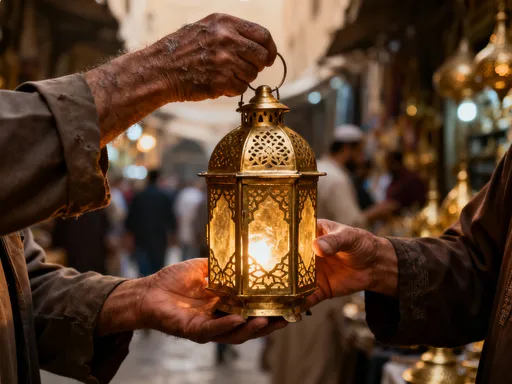
If Nouakchott has a soul, it beats loudest in the Marché Capitale, the city’s sprawling central market. Stepping inside is like entering a living tapestry of color, sound, and scent. Rows of stalls stretch in every direction, piled high with hand-dyed fabrics in bold indigo, saffron, and emerald hues. The air is rich with the earthy aroma of cumin, ginger, and dried hibiscus, mingling with the sweet smoke of grilled fish from nearby food stands.
Vendors call out in welcoming tones, their voices rising above the hum of conversation and the occasional bleat of a goat being led through the aisles. Women in flowing boubous—some embroidered with gold thread, others patterned with symbolic motifs—bargain skillfully for spices, while children weave between legs, clutching small bags of roasted peanuts. This is more than a marketplace; it’s a social hub where news is exchanged, relationships are nurtured, and tradition is lived daily.
One of the most striking features is the display of traditional Mauritanian clothing. The boubou, a long, loose-fitting garment, is worn by both men and women and often tailored from handwoven cotton or imported silk. Brightly dyed fabrics, especially those using natural pigments from desert plants, reflect a deep aesthetic heritage. Accessories like leather belts, wooden combs, and silver jewelry add personal expression to each outfit.
Bargaining is not just an economic practice but a form of interaction—a dance of respect and mutual understanding. A successful negotiation ends not with a transaction alone, but with a handshake and often an invitation to share a cup of tea. In this way, the market becomes a place of connection, where strangers become acquaintances and commerce is infused with humanity.
Music That Moves the Soul: Traditional Moorish and Soninke Sounds
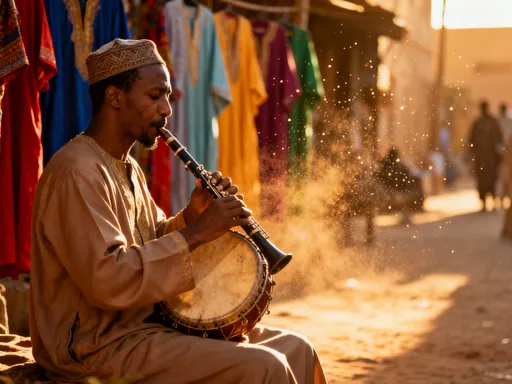
One evening, as the sun dipped below the horizon, painting the sky in deep oranges and purples, I found myself in a small courtyard in the Toujounine neighborhood. A group of musicians had gathered—elders with weathered faces and young apprentices watching closely. The air grew still as the first notes of a ardin, a nine-stringed harp played exclusively by women, began to echo through the space. This was lā‘ab, the traditional music of the Moors, a sound so ancient it feels like it rises from the desert itself.
The lead singer, a griot known locally as an iggawen, began to chant in Hassaniya Arabic, her voice both powerful and tender. Her lyrics told stories of migration, love, and ancestral pride—narratives passed down orally for generations. The rhythm, driven by the t’beul (a large drum played with curved sticks), pulsed like a heartbeat. Children clapped along, while elders nodded in recognition, their eyes closed as if reliving memories embedded in the melody.
Griot traditions are central to Mauritanian identity. These hereditary storytellers are more than entertainers—they are historians, genealogists, and moral guides. In a society where written records were historically limited, music became the archive. Every song carries layers of meaning: a family lineage, a historical event, or a lesson about honor and community. The preservation of this art form is not merely cultural—it is an act of resistance against erasure.
While lā‘ab is distinctly Moorish, the Soninke people, one of Mauritania’s major ethnic groups, contribute their own rich musical traditions. The balafon, a wooden xylophone with gourd resonators, produces bright, cascading notes that often accompany dance. During a visit to a cultural center in the Ksar district, I witnessed a performance where Soninke drummers and dancers moved in synchronized waves, their steps telling stories of harvests, weddings, and spiritual journeys. The energy was electric, yet deeply rooted in reverence.
For visitors, experiencing live traditional music is not just entertainment—it’s an invitation into the emotional core of the culture. It reminds us that in Nouakchott, art is not separated from life. It is woven into the fabric of daily existence, offering both comfort and continuity in a rapidly changing world.
Art in the Sand: Exploring Local Craftsmanship
Just beyond the market’s edge, tucked into narrow alleyways and quiet courtyards, are the workshops where Nouakchott’s artisans practice their crafts. These are not tourist-oriented souvenir stalls, but functional spaces where skill is passed from parent to child, often within family cooperatives. One such workshop, run by a collective of women in the Dar-Naim district, specializes in silver jewelry adorned with Berber symbols—geometric patterns representing protection, fertility, and the unity of nature.
I watched as an elder artisan, her fingers steady despite decades of work, hammered delicate filigree into a pendant. Each piece is handmade, often taking days to complete. The silver is traditionally sourced from recycled coins or old family heirlooms, giving each creation a sense of history. The designs, though beautiful, are not merely decorative—they carry spiritual significance. A crescent shape may symbolize the moon, a vital guide for desert travelers, while a triangle could represent the triad of family, faith, and land.
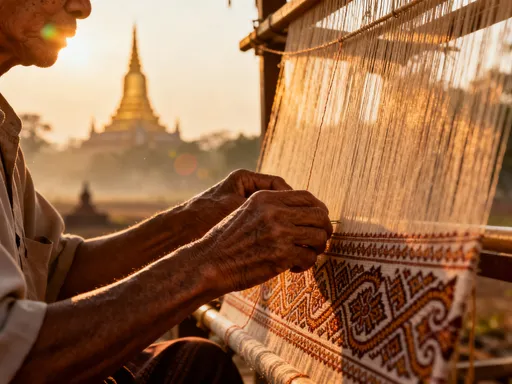
Elsewhere, in the Tevragh-Zeina neighborhood, a group of weavers demonstrated the art of creating sefsari, the traditional headscarves worn by Mauritanian women. Using handlooms, they wove cotton and silk into intricate patterns, some dyed with natural indigo extracted from desert plants. The process is slow, deliberate, and meditative—each thread a testament to patience and precision. One weaver explained that her grandmother taught her the craft at age ten, and now she teaches her own daughters. “This is how we keep our identity,” she said simply.
Leatherwork is another pillar of Nouakchott’s artisanal culture. Tanners in the El Mina district treat hides using methods that have changed little over centuries. The smell is strong—tannins from acacia bark mingling with water from nearby wells—but the results are remarkable: supple bags, belts, and sandals dyed in rich browns and deep reds. These items are not only functional but culturally significant, often gifted during weddings or religious celebrations.
Supporting these artisans goes beyond shopping—it’s an act of cultural preservation. When travelers purchase directly from cooperatives or attend community-run craft fairs, they contribute to sustainable livelihoods. More importantly, they affirm the value of handmade traditions in an age of mass production. In Nouakchott, craftsmanship is not a relic of the past; it is a living, breathing expression of identity.
Cultural Etiquette: How to Connect Respectfully
One of the most profound moments of my visit came unexpectedly. After browsing a craft stall, I was invited into a nearby home by the vendor, a woman named Fatimé. I hesitated—was this appropriate?—but her warm smile put me at ease. Inside, we sat on woven mats in a shaded courtyard. Within minutes, a small pot of green tea was heating over a charcoal stove. This was not just hospitality; it was ritual.
In Nouakchott, tea is more than a drink—it’s a symbol of respect, friendship, and patience. The preparation is meticulous: fresh mint leaves are layered with Chinese gunpowder tea and sugar, then brewed and poured from a height to create a frothy top. The host serves three rounds, each with its own meaning: the first is bitter like life, the second is sweet like love, and the third is smooth like death. Though the symbolism may vary, the act remains sacred—a pause in the day to connect, listen, and honor the guest.
Respectful interaction begins with simple gestures. Greetings are essential and often lengthy. A handshake is common, though physical contact between genders may be limited depending on the individual. Using formal titles and speaking in a calm, polite tone shows consideration. Dressing modestly—covering shoulders and knees—is not just respectful but practical in the conservative social environment.
Another key aspect is the concept of hoddu, or dignity. People value composure and restraint in public. Raising one’s voice, appearing rushed, or showing impatience can be seen as disrespectful. Instead, a slow, attentive presence is appreciated. When I sat with Fatimé and her family, I made a point to listen more than speak, to accept the tea with both hands, and to express gratitude in both words and silence. The conversation was limited, but the connection was deep.
For travelers, these moments of cultural exchange are priceless. They require humility, openness, and a willingness to step outside one’s comfort zone. But the reward is genuine human connection—something no guidebook can guarantee, yet Nouakchott offers freely to those who approach with respect.
Festivals and Community Life: When the City Comes Alive
During my stay, I was fortunate to witness Nouakchott’s National Day celebrations—a vibrant showcase of national pride and cultural unity. The city transformed. Streets were decorated with green, red, and gold banners—the colors of the Mauritanian flag. Schools and community groups rehearsed for weeks, preparing dances, songs, and theatrical performances that reflected the country’s diverse heritage.
In Independence Square, a grand stage hosted performances from across the nation. A troupe from the Tagant region performed a traditional camel procession dance, their movements mimicking the gait of the desert’s noble animal. Later, a Soninke ensemble played the djembe and balafon, their rhythms drawing crowds into spontaneous dancing. Children in handmade costumes paraded through the square, waving flags and chanting poems about unity and peace.
Food played a central role. Families brought dishes from their regions—thieboudienne (fish and rice), lakh (millet porridge), and sweet millet cakes drizzled with date syrup. Sharing meals in public spaces reinforced the sense of community. Even strangers exchanged plates, offering tastes of their specialties. The atmosphere was joyful but never chaotic—there was a quiet order, a collective understanding of shared space and mutual respect.
Religious festivals, such as Eid al-Fitr, also bring the city together. While deeply spiritual, these occasions are marked by cultural expressions—new clothing, family gatherings, and charitable giving. Mosques overflow with worshippers, and neighborhoods echo with the sounds of prayer and celebration. Homes open to visitors, and children receive small gifts. These events are not just religious observances but social anchors, reinforcing bonds between families, neighbors, and generations.
What stands out is how these celebrations are rooted in authenticity. There is little commercialization, no performative tourism. People celebrate for themselves, not for an audience. Yet, visitors who observe with humility are often welcomed as silent participants. A nod, a smile, a respectful distance—these small acts allow outsiders to witness something rare: culture lived, not staged.
Beyond the City: Day Trips to Cultural Villages
To fully understand Nouakchott, one must venture beyond its borders. Just a two-hour drive south lies the coastal village of Nouadhibou, a working fishing port where daily life unfolds with quiet determination. Here, wooden pirogues painted in bright blues and yellows line the shore, repaired by hand using techniques passed down for generations. Men haul nets heavy with sardines and tuna, while women clean and dry the catch under the relentless sun.
The rhythm of life here is tied to the tides. There are no tourist traps, no guided tours—just real work, real people. Yet, curiosity is met with openness. I was invited to sit with a group of women as they smoked fish over open fires, their faces lined with sun and wisdom. They explained the process: salting, drying, smoking—each step essential for preservation in a land without widespread refrigeration. Their knowledge is practical, yes, but also deeply cultural, a way of surviving and thriving in a harsh environment.
Further inland, in the desert outskirts, nomadic traditions persist. While fewer families live fully nomadic lives today, many maintain seasonal migrations with their herds of goats, sheep, and camels. I visited a semi-nomadic camp where families lived in traditional tents made of woven goat hair. Inside, the space was simple but orderly—woven mats, leather pouches, and a small stove for tea. The children spoke Hassaniya Arabic and ran barefoot across the sand, their laughter carrying across the dunes.
Engaging with these communities requires care. Sustainable tourism means not treating people as exhibits. It means asking permission before taking photos, respecting private spaces, and contributing in meaningful ways—perhaps by purchasing handmade items or donating school supplies. Some local organizations facilitate responsible visits, ensuring that interactions benefit the community rather than disrupt it.
These day trips offer a fuller picture of Mauritanian life—one that balances urban energy with rural resilience. They remind us that culture is not confined to cities or festivals. It lives in the way a fish is cleaned, a tent is raised, or a song is sung at dusk. In Nouakchott and its surroundings, tradition is not frozen in time. It evolves, adapts, and endures.
Nouakchott defies expectations. It is not a forgotten desert outpost, but a living cultural hub where music, craft, and community converge. This city does not shout its significance—it hums it, quietly and steadily, through the clink of silver, the strum of a harp, and the shared cup of tea. For those willing to slow down, to listen, and to engage with humility, Nouakchott offers a rare gift: authenticity in its purest form. It invites us to look beyond the surface, to embrace the unfamiliar, and to discover the quiet power of a culture that sings its story not for tourists, but for itself. In a world of curated experiences, Nouakchott remains unfiltered, unapologetic, and unforgettable.