You Won’t Believe What I Saw from These Serengeti Viewpoints
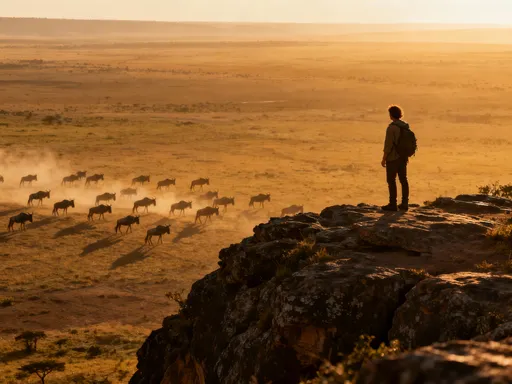
Standing on a rocky outcrop as thousands of wildebeest thundered past below, dust swirling like smoke—I’d never felt so small and alive at once. The Serengeti isn’t just a place; it’s a living pulse of nature. Its viewpoints don’t just show you scenery—they shift your perspective. What makes these vantage points so powerful? Let me take you there, one breathtaking moment at a time.
The First Glimpse: Entering the Serengeti from the North
As the vehicle rolls through the Bologonja gate, a quiet transformation begins. The landscape shifts subtly but unmistakably—from dry acacia woodlands with scattered bushes and thorny thickets to vast, open plains that stretch beyond the curve of the earth. This northern entry point into the Serengeti National Park in Tanzania offers travelers one of the most gradual and emotionally resonant introductions to the ecosystem. There is no sudden reveal, but rather a slow unfolding, like the pages of a sacred book turning with intention. The first wide-angle view emerges after a gentle rise, and suddenly, the horizon opens into an unbroken sweep of golden grassland, dotted with distant herds that look like drifting clouds at first glance.
What sets this moment apart is not just the visual scale, but the sensory immersion. The air changes—drier, warmer, carrying the faint scent of sun-baked earth and wild herbs. Bird calls grow more frequent: the sharp cry of a martial eagle overhead, the rhythmic tapping of a woodpecker in a lone tree. As the road continues southward, slight elevations in the terrain create natural viewing platforms. These subtle rises are more than geographical features—they are narrative turning points in the journey. From just 20 or 30 feet above the plain, the movement of wildlife becomes visible in ways impossible at ground level. A ripple in the grass resolves into a herd of Thomson’s gazelles. A dark smudge on the horizon reveals itself as a slow-moving column of elephants.
Elevation, even in modest degrees, transforms passive observation into understanding. It allows the viewer to see patterns: the flow of migration, the clustering of grazers around water sources, the cautious spacing of predators on the periphery. This is where the Serengeti begins to speak—not in words, but in rhythms. For many visitors, especially women traveling with family or on personal journeys of reflection, this first glimpse is not just scenic—it is symbolic. It marks the transition from the structured world of schedules and screens to a realm governed by natural cycles, where presence matters more than productivity.
Simba Kopje: Where Lions Watch and Travelers Pause
Rising abruptly from the flat savanna like ancient sentinels, kopjes are clusters of weathered granite boulders that have endured millions of years of wind and rain. Among them, Simba Kopje—Swahili for “lion rock”—stands out not only for its dramatic silhouette but for its deep connection to predator life in the Serengeti. To climb its sun-warmed stones is to step into a world where geology and biology intertwine. The crevices offer shelter to hyraxes and reptiles, the overhangs serve as nurseries for leopard cubs, and the highest ledges become observation posts for lions surveying their domain.
Visitors ascending Simba Kopje are often struck by the silence at the summit. Despite the constant hum of life below, the top of the formation feels like a sanctuary suspended above time. From this vantage, it’s possible to watch a lioness stretch lazily in the late afternoon light, her gaze fixed on the plains where zebra and wildebeest graze in cautious groups. The elevated position provides a rare advantage: seeing not just individual animals, but their relationships. A pride of lions does not merely rest—it strategizes, communicates, and monitors. Their stillness is not idleness; it is patience in motion.
What makes kopjes such powerful destinations is their dual role as both scenic highlights and ecological hubs. The rocks absorb heat during the day and release it slowly at night, creating microclimates that support unique plant life. This, in turn, attracts insects, birds, and small mammals, forming a concentrated food web. For travelers, especially those seeking meaningful experiences beyond photography, Simba Kopje offers a lesson in stillness and observation. Sitting quietly on a warm boulder, one begins to notice details often missed in the rush of a game drive: the flick of a tail, the sudden alertness of a herd, the distant call of a hyena at dusk. It’s a reminder that true connection with nature comes not from movement, but from presence.
Naabi Hill: The Ceremonial Gateway with a Panoramic Soul
At the southern entrance of the Serengeti, Naabi Hill stands as both a geographical and symbolic threshold. Marked by a simple gate and a visitor information center, this elevated point offers one of the most iconic panoramic views in the park. It is here, in the short rainy season between November and December, that the Great Migration often begins its southward journey toward the nutrient-rich grasslands of the Ndutu region. Standing atop Naabi Hill, with the wind gently tugging at clothing and hair, visitors gain a sweeping 360-degree perspective that captures the essence of the Serengeti’s seasonal rhythm.
The landscape shifts dramatically with the months. During the green season, the plains are lush and vibrant, painted in shades of emerald and lime, fed by seasonal rains. Wildebeest herds stretch across the horizon in endless lines, calves trotting beside their mothers, their high-pitched calls blending with the rustle of grass. By contrast, the dry season transforms the same terrain into a golden expanse, cracked in places by drought, where survival hinges on endurance and timing. From Naabi Hill, these changes are not abstract—they are visible, tangible, almost audible in the way animal movements alter with the environment.
Beyond its ecological significance, Naabi Hill holds cultural resonance. The area has long been inhabited by the Maasai people, whose semi-nomadic pastoral traditions align closely with the natural cycles of the region. While direct interaction with Maasai communities within the park is limited today, their presence is felt in place names, traditional land use patterns, and the enduring respect for the land as a living entity. For many female travelers, particularly those navigating transitions in life—empty nesting, career shifts, personal renewal—Naabi Hill becomes a metaphor for passage. It is not just an entry point into a national park, but a threshold into deeper awareness. To stand here is to witness beginnings and cycles, to feel the weight of time and the promise of renewal.
Seronera Valley Overlook: Heart of the Action
If the Serengeti has a beating heart, it is the Seronera Valley. Located in the central region of the park, this lush corridor is fed by the Seronera River and supports one of the highest concentrations of wildlife in Africa. Early morning drives along the ridge paths near the Serenera Research Center offer unparalleled elevated views of the valley floor, where the drama of predator and prey unfolds with startling clarity. From these overlooks, travelers can witness lions lounging beneath sausage trees, leopards draped over acacia branches, and cheetahs scanning the open grass for vulnerable young.
What sets Seronera apart is not just the density of animals, but the visibility of their interactions. On the ground, a game drive may capture isolated moments—a kill, a chase, a confrontation. But from the ridge, patterns emerge. A pride of lions may be seen moving in coordinated fashion, using terrain features to approach grazing herds. Hyenas gather at dusk, their eerie whoops echoing across the valley as they assess opportunities. Elephants move in family groups, matriarchs leading younger members to water sources known only through generations of memory. These elevated perspectives allow visitors to see not just animals, but systems.
The Seronera Research Center, operated by Tanzanian wildlife authorities, adds another layer of depth to the experience. While not open to the general public for tours, its presence underscores the scientific importance of the area. Decades of study have been conducted here on lion behavior, elephant migration, and bird diversity. For travelers interested in conservation, this context enriches the viewing experience. It shifts the narrative from spectacle to stewardship. From the overlook, one doesn’t just watch nature—one begins to understand it. For women who value knowledge and purpose in travel, Seronera Valley offers both inspiration and insight, reminding us that beauty and balance are not accidental, but interconnected.
Balloon Safari: A Sky-Level Perspective Like No Other
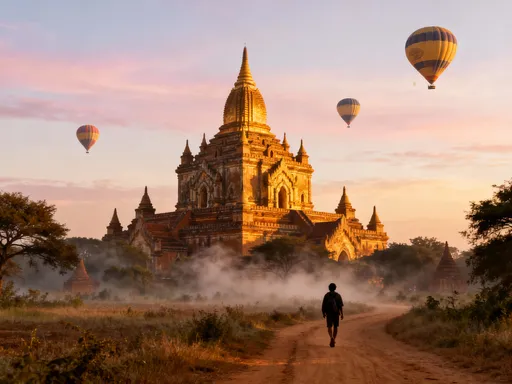
At dawn, when the world is still wrapped in soft blue light, a hot air balloon rises silently above the Serengeti. There is no engine roar, no dust trail—just the gentle hiss of the burner and the quiet awe of passengers suspended thousands of feet in the air. From this altitude, the scale of the ecosystem becomes truly comprehensible. Herds that appear as clusters from the ground stretch into vast, flowing rivers of movement across the land. The patchwork of grasslands, woodlands, and seasonal wetlands reveals itself in intricate detail, like a living map drawn by nature itself.
The silence is perhaps the most profound aspect of the balloon safari. On the ground, the Serengeti is a symphony of sounds—the grunts of wildebeest, the calls of birds, the rustle of grass. In the air, it is quiet, almost sacred. This stillness allows for a different kind of attention. Travelers notice patterns invisible from below: the geometric precision of migration routes, the way herds avoid certain areas due to predator presence, the subtle changes in vegetation that signal water beneath the surface. The balloon does not chase animals; it floats above them, offering a perspective of respect and distance.
For many women, especially those seeking moments of clarity or emotional reset, the balloon experience is transformative. Suspended between earth and sky, with the sunrise painting the horizon in hues of rose and gold, there is a sense of being both insignificant and deeply connected. The journey lasts about an hour, followed by a celebratory champagne breakfast on the plains—a tradition that feels less indulgent and more like a ritual of gratitude. This vantage point does not replace ground-level exploration; rather, it completes it. It answers the unspoken question: What does the Serengeti look like when seen not as a collection of moments, but as a whole?
Moru Kopjes and the Hidden Highlands
Far from the well-trodden circuits of central Serengeti, the Moru Kopjes rise like ancient fortresses in the western part of the park. Less visited due to their remote location, these dramatic rock formations offer some of the most rewarding viewpoints for those willing to venture off the standard route. The journey itself is part of the experience—longer drives through open plains, occasional crossings of seasonal rivers, and the growing sense of solitude as other vehicles disappear from sight.
Climbing one of the Moru Kopjes at midday, when the sun is high and the plains shimmer with heat, provides a sweeping vista of isolated grasslands, acacia clusters, and remnants of ancient volcanic activity. Unlike the more famous kopjes, Moru is known for its high concentrations of zebra, particularly during the dry season when water sources are scarce. From the top, it’s possible to watch entire families navigate the terrain, foals staying close to their mothers, stallions taking turns to scan for danger. The silence here is profound—broken only by the wind and the occasional call of a raptor circling overhead.
The value of such off-route viewpoints lies not just in wildlife sightings, but in the quality of attention they invite. Without the pressure of shared sightings or guide schedules, travelers can linger, reflect, and simply be. For women who travel to reconnect—with themselves, with nature, with a sense of wonder—these quieter spaces offer a rare gift: undisturbed presence. The Moru Kopjes remind us that not all powerful experiences need crowds or fanfare. Sometimes, the most meaningful moments come in stillness, on a sun-warmed rock, watching the world breathe below.
Sunset at Retina Hill: Nature’s Daily Masterpiece
As the day nears its end, many guides bring visitors to Retina Hill, a modest but perfectly positioned rise in the central Serengeti. The name, though unofficial, speaks to the unforgettable clarity of vision here at dusk. As the sun descends, the light shifts from bright gold to deep amber, then to a rich crimson that stains the entire sky. The plains, bathed in this surreal glow, seem to pulse with a quiet energy. Shadows lengthen, animals move toward water, and the air cools rapidly, carrying the faint scent of dew on grass.
What makes this daily ritual so powerful is its emotional weight. Unlike the excitement of a morning sighting or the awe of a balloon ride, sunset at Retina Hill is introspective. It marks the closing of a chapter, a moment to reflect on what has been seen and felt. The silence that follows the last light is not empty—it is full. Full of memory, of gratitude, of a deep sense of belonging to something larger. For women who have spent years nurturing others—children, families, careers—this quiet communion with nature can feel like a long-overdue return to self.
Ending each day with intentional viewing transforms a safari from a series of encounters into a coherent journey. It creates rhythm, closure, and space for integration. The Serengeti does not perform for cameras; it simply exists. And in bearing witness to its daily masterpiece, visitors are not just spectators—they become part of the story. The fading light is not an end, but an invitation: to pause, to listen, to carry the wilderness within.
These viewpoints are more than photo stops—they’re portals to understanding the Serengeti’s rhythm. From kopjes to hot air balloons, each offers a unique lens on one of Earth’s last great ecosystems. Choosing where and how to look changes not just what you see, but who you become in the process. Go, find your viewpoint—and let the wilderness speak.